Lu Xun's Former Residence: The Sole Light
A casual essay assignment for the Modern History course.
The autumnal atmosphere of Beijing is often particularly intense, for this land brims with profound history. Ancient capitals of the Jin, Yuan, Ming, and Qing dynasties rose upon this soil; the smoke of war from Beiping lingers long without dissipating; countless heroes and sages have halted here, leaving behind silhouettes that the world reveres—and the great standard-bearer of the New Culture Movement, Lu Xun, also left a brilliant mark in Beijing.
No. 19, Fuchengmen Ertiao—this was my first stop upon coming to Beijing during my university years: Lu Xun’s Former Residence. I wondered with what state of mind this great literary master came to the flourishing city of Beijing? What manner of scenery would the former residence of such a lifelong vanguard of the pen hold?
The exhibition hall sits within a hutong (narrow alleyway), secluded and tranquil. I entered from a bustling commercial street, possessing a certain sense of “a winding path leading to a secluded retreat,” much like the profound connotations under Lu Xun’s literary brushwork.
Perhaps to avoid excessively disturbing the legacy left by the master, the hutong has remained largely unchanged. Beside it stand plump birds scattered here and there; the crisscrossing network of hutong lanes maintains its antique appearance, with clothes drying openly on all sides and motorcycles parked around. I imagine that were Mr. Lu Xun alive today, he would be pleased to witness such harmonious development. Heroes dedicated themselves to peace, and this is precisely the tranquility they prayed for.
The tiled houses flanking the ancient main gate are covered in moss, while towering trees provide shelter amidst the autumn wind, as if Mr. Lu Xun were still extending welcoming arms to visitors. Such scenery and atmosphere readily bring to mind secluded dwellings like “Zhuge’s Thatched Cottage” and “The Humble Room Inscription.”
The above description can hardly be called baseless association; in fact, many visitors, before even stepping through the gate, begin plotting photographs beside the tall trees and tiled houses.
After making an online reservation for the exhibition, one can enter by displaying a health code and ID card. There is not a single fee charged—a true display of Beijing’s generosity.
The plaque “Lu Xun Former Residence” was written by Guo Moruo. It seems Mr. Guo Moruo truly traveled far and wide—the calligraphy of our three famous local universities also originated from his brush.
Interestingly, “From afar it looks like a dog, up close it looks like a Japanese dog, upon closer inspection, it turns out to be Mr. Guo Moruo.” This remark is rumored to be Lu Xun’s evaluation of this “talent and rogue.” Whether it is authentic can no longer be verified, but after verification, the former residence in Shanghai was actually also inscribed by Mr. Guo Moruo, so personally I feel the probability that Mr. Lu Xun actually said that evaluation should be quite small.
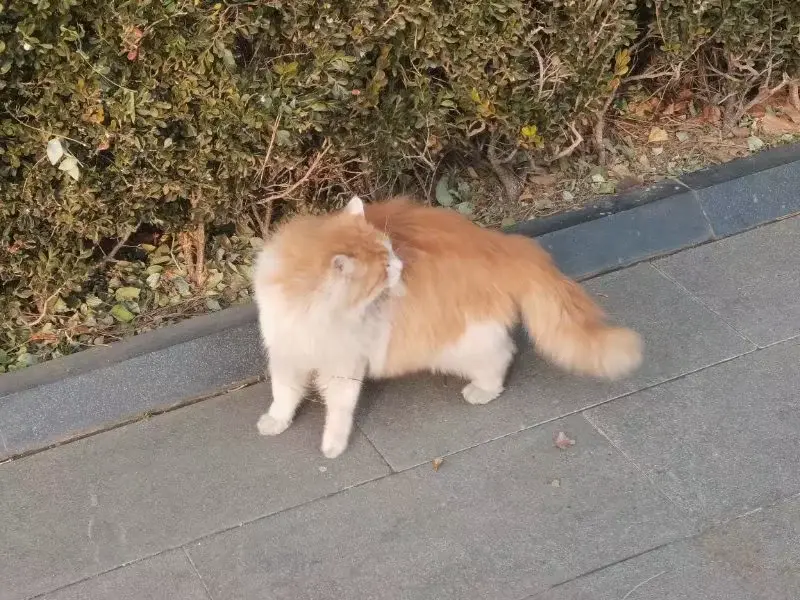
Entering the courtyard, I was surprised to find it so intimate? The first things to catch one’s eye are two plump orange cats, quietly enjoying the crowd’s adoration, occasionally stretching lazily and sauntering a few steps. The solemn former residence instantly became intimate and approachable. Thinking about it, although Mr. Lu Xun originally gave people a serious impression, his lovable qualities were by no means few—could works like “Old Tales Retold” be written by someone with a dry and insipid soul?
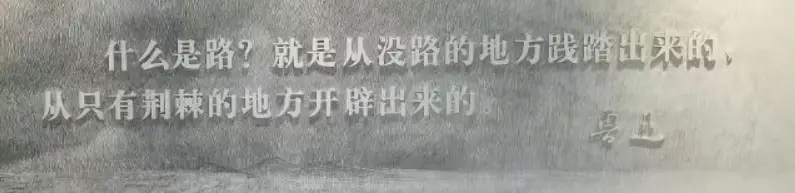
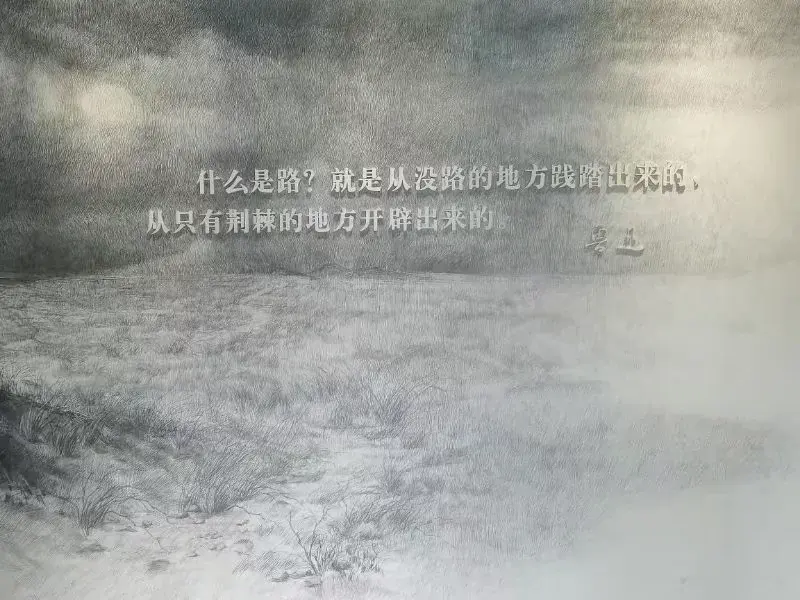
The main exhibition hall has two floors, above ground and below, using Lu Xun’s life timeline as its thread, roughly divided into several stages. Each exhibition room unfolds continuously according to Mr. Lu Xun’s original writings. At the very front stands a large white wall with simple patterns, upon which that famous quotation is engraved: “Originally there were no paths in this world; but as more people walked, paths were formed.”
The exhibition begins with Lu Xun’s youth; a replica model of Luzhen appears particularly somber. In the 1890s, when the Opium War raised the curtain of capitalist plunder, the Qing government was still immersed in the fantasy of being a celestial empire. The Self-Strengthening Movement attempted to “learn the superior techniques of the barbarians to control the barbarians,” yet remained limited to the military level. Subsequently, the rise of Japan brought the First Sino-Japanese War, which finally sparked widespread reflection in China. This was an era of ideological transition; the Self-Strengthening Movement also sent students abroad—people like Zhan Tianyou, Rong Hong, and Zhu Kezhen indeed made tremendous contributions to China’s development. At this stage, Lu Xun was still receiving traditional private school education, which also laid a solid foundation for his profound literary skills. The exhibition hall contains quite a few of his handwritten books from childhood, such as ancestral precepts, family letters, and classics. In essays like “Village Opera” and “From Hundred-Plant Garden to Three-Flavor Study,” Mr. Lu Xun also spoke intermittently of his childhood memories.
In his youth, the Hundred Days’ Reform occurred, and capitalist theories gradually spread through society. In the 24th year of Guangxu (1898), Lu Xun entered the Nanjing Naval Academy, changing his name to Zhou Shuren. He then continued his studies in Nanjing.
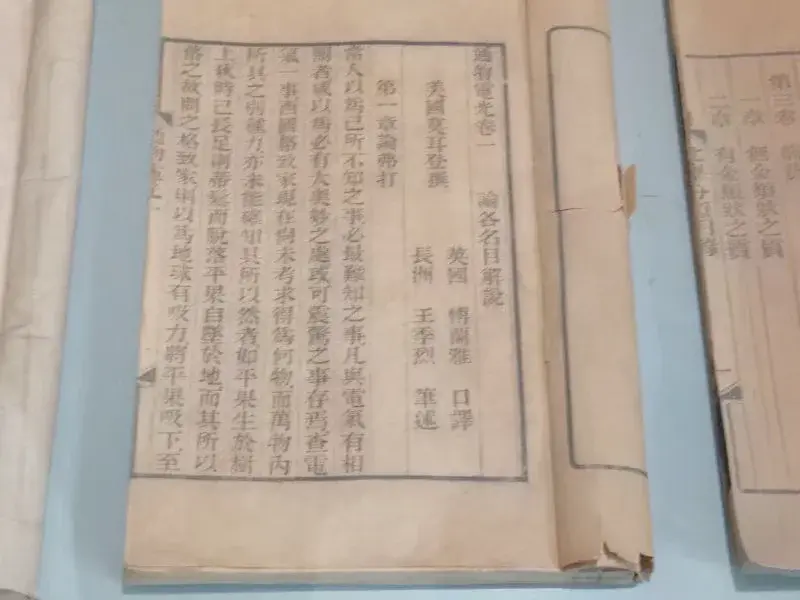
In 1899, Lu Xun transferred to the Jiangnan Army Academy to study mining. The textbooks on display have basically no illustrations; their content涉及 chemistry and physics, simply explaining phenomena like lightning and thunder. The books still preserve discursive phrases like “ordinary people believe” and “within it lies the Way.” Moreover, it was during this period that Lu Xun encountered Huxley’s Evolution and Ethics.
The next exhibition hall tells the story of Lu Xun’s study abroad; this is also the hall where visitors linger the longest.
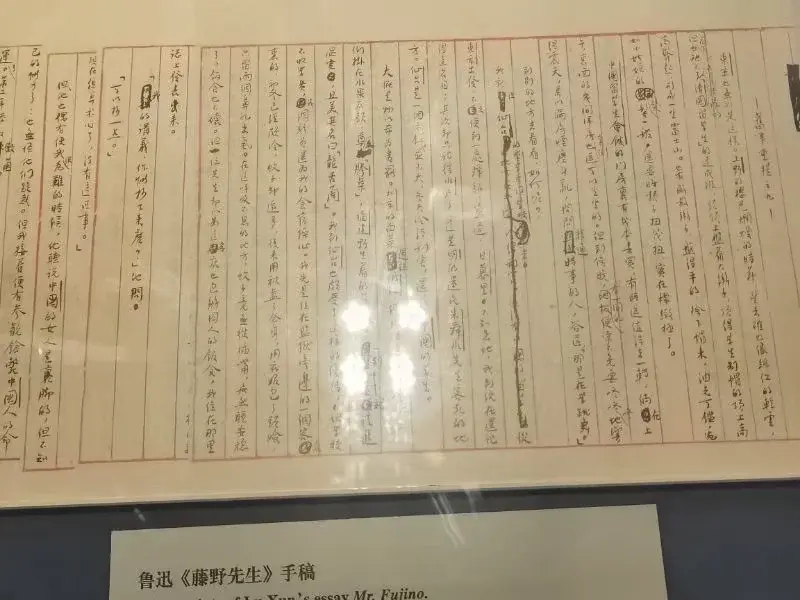
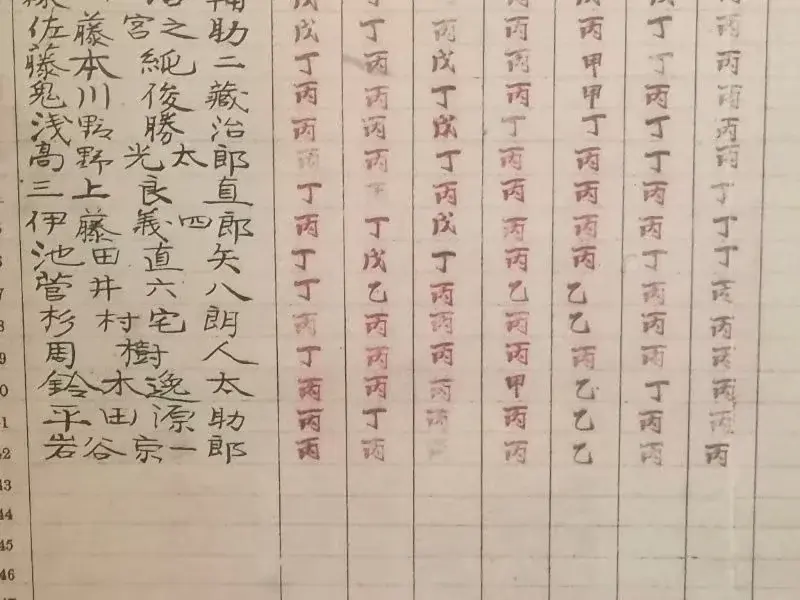
In 1902, Mr. Lu Xun graduated from the Mining and Railroad Academy. In March, he and others including Qian Junfu went to Japan for government-funded study abroad. The exhibition hall preserves Lu Xun’s medical school grades from Japan. In 1904, Mr. Lu Xun met Mr. Fujino; Mr. Fujino’s attitude toward China indeed commands respect, but the circumstances of that time had already caused Lu Xun to waver in his determination to study medicine.
The Self-Strengthening Movement and the Hundred Days’ Reform failed consecutively; the Qing government’s constitutional movement was also full of lies. The Eight-Nation Alliance broke into Beijing, forcing China to sign the humiliating Boxer Protocol. The ignorance of the Qing government was unmistakably revealed, and the numbness of the Chinese people chilled Lu Xun’s heart. Thus, Lu Xun abandoned medicine for literature, engaging in various literary activities. During these days, Lu Xun translated numerous foreign literary works, forming his own worldview.
In 1924, Lu Xun moved with his mother to No. 61 Zhuan塔 Hutong, where they were temporarily staying. The room was quite low, yet immortal works such as “Graves,” “Wild Grass,” and “Hesitation” were all written in this room.
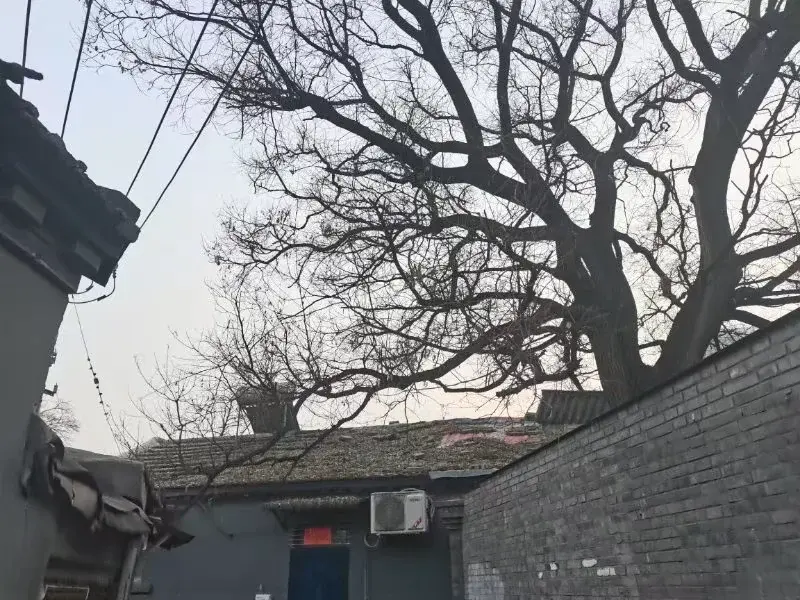
The “internet-famous” jujube trees are also here.
“In my backyard, I can see two trees beyond the wall. One is a jujube tree, and the other is also a jujube tree…”
Those two famous jujube trees stand right here. In the turbulent times of the Republic of China, with imperialism and the Beiyang warlords engaging in chaotic warfare, and the intellectual world undergoing sharp division, Lu Xun needed to use more powerful words to inspire young people and even society. The jujube trees symbolize those unyielding warriors who continue to strive upward even under a “cold sky”!
Beyond his literary accomplishments, it turns out that Mr. Lu Xun’s artistic attainments were also remarkably rich—after all, he had held a great interest in line drawings in books since childhood. While serving in the Bureau of Education, Lu Xun designed the Peking University emblem. In an era when social enlightenment was needed, the rich humanistic significance of the PKU emblem was the best expression of Lu Xun’s hopes: people-oriented, enlightening the people’s wisdom.
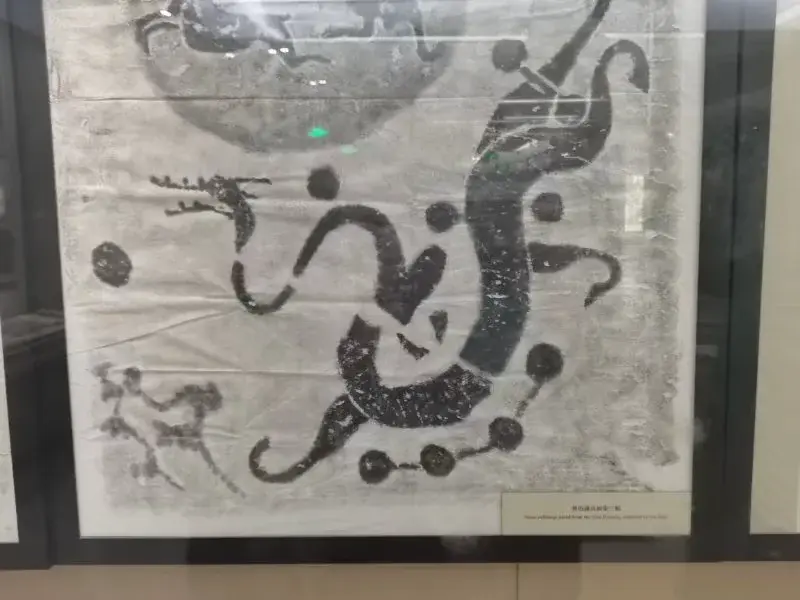
The exhibition hall also contains various trademarks designed by Lu Xun; the patterns vary in thickness, height, and shortness, all quite interesting. Furthermore, it turns out that Mr. Lu Xun greatly admired Han Dynasty murals and collected many works—all featuring bold, powerful lines that radiate strength. I imagine that the unrestrained and majestic righteousness of Han Dynasty murals was likely precisely the spirit that the gentleman sought.
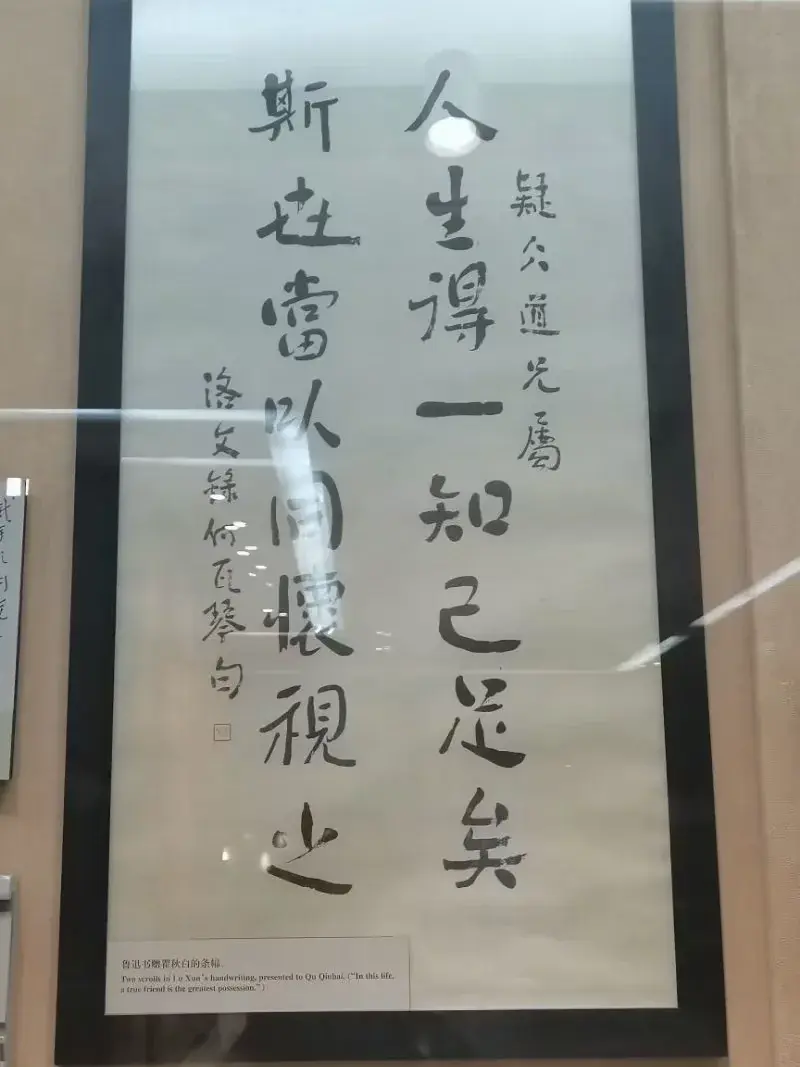
Seeing this, I was puzzled—having come this far, approaching the end, Mr. Lu Xun’s development had basically followed the historical tide, so what about his connection with the Communist Party? The next exhibition hall happened to tell of Lu Xun’s camaraderie with Qu Qiubai, even presenting a scroll he gifted with the couplet “Having found one soulmate in life is sufficient.” However, strictly speaking, Mr. Lu Xun probably counted as a liberal, striving to find a path to save China, practicing what he believed in.
“If the dead are not buried in the hearts of the living, then they truly and completely die.”
This was Mr. Lu Xun’s own value system, and he indeed achieved it.
Many people in the exhibition hall were conversing in hushed tones, saying things they normally wouldn’t say; I even heard phrases like “the economic base determines the superstructure.” I originally wanted to laugh, but then suddenly realized—it was the gentleman’s lingering influence that caused us to say words we wouldn’t normally utter in this place. We unconsciously show respect before Mr. Lu Xun—is this not a form of recognition, an attitude? When the First Emperor passed away, his remaining prestige still awed distant customs. Mr. Lu Xun was not a person in power, yet he left behind such an abundance of precious spiritual wealth for later generations.
Arriving at the final part of the exhibition, we come to the circumstances before Mr. Lu Xun’s death: three days, two moments, one day.
Without any words, here there is only long-lasting silence, silence.
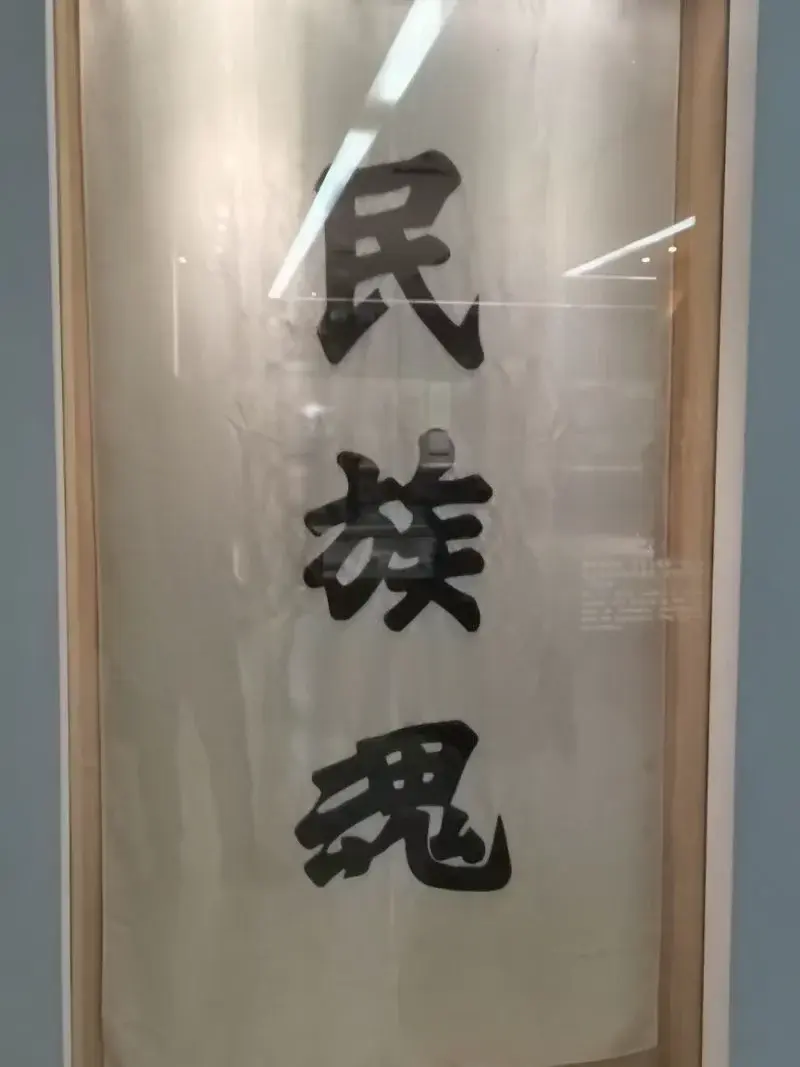
Walking in silence to the end of the corridor, I discovered that above were carved three vigorous and powerful large characters—National Soul.
I involuntarily recalled what the gentleman said in “Reflections”:
If thereafter there truly is no torch fire, then I shall be the sole light.