
The Selfish Gene: The Question of Altruistic Morality
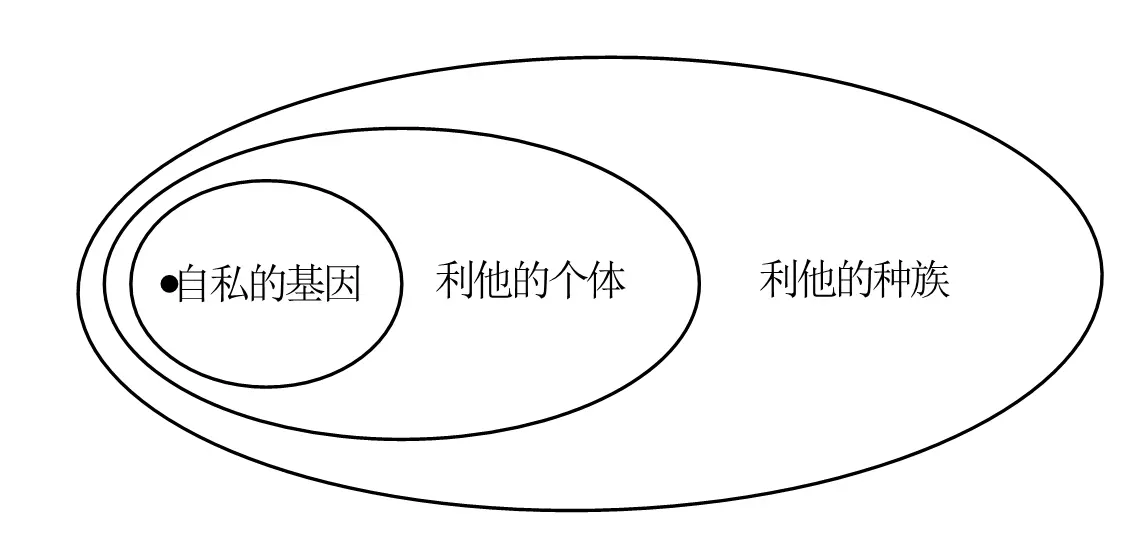
I. The “Selfishness” in the Meaning of Natural Selection
1. What is “Selfishness” in the Book?
Anthropomorphic descriptions often lead to misunderstandings. The phrase “Heaven and Earth are not benevolent, treating all things as straw dogs” originally meant that natural laws treat all species equally, yet many use it to condemn the heartlessness of nature. “The Selfish Gene” aims to argue for a perspective on “evolutionary theory” akin to natural law—that genes are the fundamental unit of natural selection (the concepts of “fundamental,” “optimal,” and “sole” are entirely different, and the controversy in understanding lies here). Natural selection and genes possess no subjective consciousness; what intrigues us is the mechanism through which they drive species transformation.
The author, Dawkins, himself complained in the 30th-anniversary introduction1:
“The Selfish Gene has been criticized for anthropomorphizing genes, which requires explanation (if not apology).”
In this book, the meaning of selfishness is taking all actions to enhance survival probability in nature—implying no subjective consciousness, moral standards, or cultural phenomena, merely quantified as increased genetic inheritance probability.
The author also considered titles like “The Cooperative Gene” or “The Immortal Gene,” ultimately choosing “The Selfish Gene” likely to create a stark contrast with biological altruistic behaviors, but with two requirements:
- Genes are purposeless and unconscious
- Selfish behavior refers to enhancing one’s own natural survival probability
The laws of species evolution ≠ the laws of societal operation. The author advocates distinguishing evolutionary theory from social development, emphasizing that this book focuses on explaining biological behaviors through natural selection.
2. Natural Selection and Evolutionary Theory
Forty years ago, gene-related research wasn’t as widespread as today; now, the importance of genes is self-evident, but we must avoid “genetic determinism” thinking. Although Darwin left us “natural selection,” its mechanisms remained enigmatic. Is the unit of evolution the individual, population, or gene? How to explain animal altruistic behaviors?
Analyze the motivation behind parental favoritism?
Why are animal conflicts ritualistic—why do they drive away intruders rather than exterminate them?
Does animal camouflage constitute conscious deception?
What drives cooperation and competition among individuals?
If reproduction is the pursuit of survival, why do aging and death exist?
Beyond these, the greatest question: how can the above issues be unified within the framework of “natural selection”???
Taking “use and disuse” as an example, this represents individual selection: Giraffes’ necks gradually lengthen with environmental changes, with natural selection manifesting as the evolutionary development of individual traits.
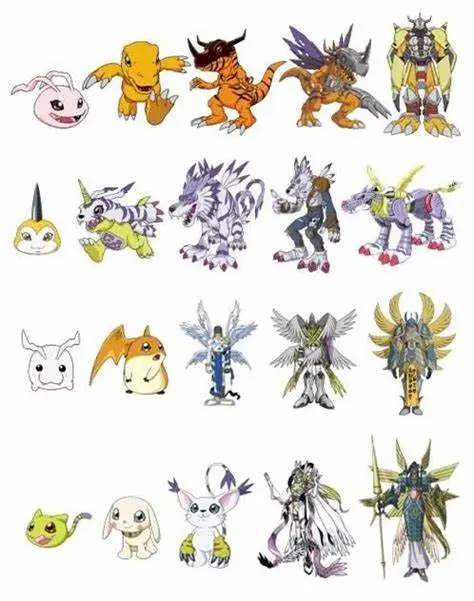
The “selfish gene selection” perspective in this book differs: Genes initially combine randomly, mutations are accidental, and genes pursue stability. This means both long-necked and short-necked giraffes existed initially, but short-necked ones couldn’t reach food, were eliminated, leaving only long-necked individuals.
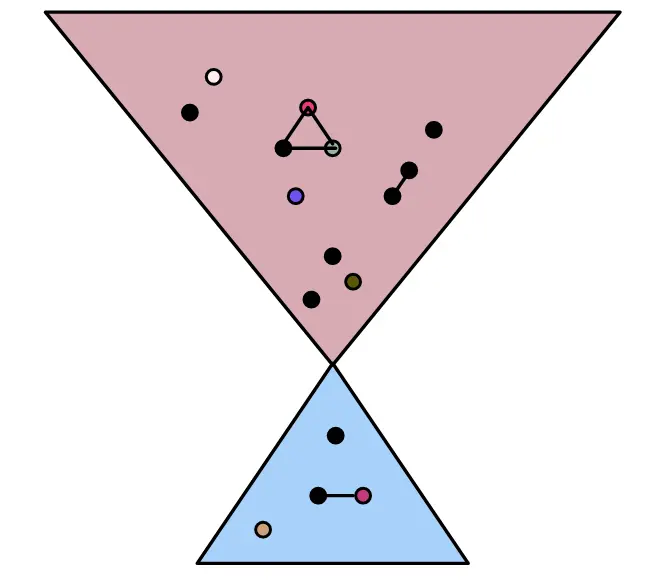
The author chooses to treat “genes” as the fundamental unit of natural selection2.
As shown below, studying biological evolution can expand infinitely from genes, individuals, races, communities, to civilizations. The author believes it’s better to focus on the smallest unit to study evolutionary processes. Any changes at higher levels essentially originate from changes in fundamental constituent units (this view remains controversial in evolutionary theory circles).
II. The Argumentative Approach from Phenomenon to Essence
Although this book is a popular science work on “evolutionary theory,” I perceive shadows of economics within it.
Darwin left us “natural selection”; Adam Smith left us “the invisible hand.”
How does natural selection occur? Kinship unit, racial unit, and individual unit advocates argue incessantly;
Is the market mechanism omnipotent? Liberals and Keynesians attack each other over this.
Selfish genes ≠ all assumptions in this book;
Rational economic man ≠ all assumptions in economics;
Both essentially make theoretical assumptions about real-world phenomena that are difficult to verify, merely providing an explanatory perspective.
The difficulty with social science viewpoints lies in: even if you discover an elegant theory to explain reality, in a world full of friction, how do you prove their causal relationship?3 Economics employs experiments and econometrics for proof; this book primarily establishes frameworks and argues through logical deduction—exposing contradictions in other individualist and populationist theories, yet seems somewhat lacking in positive evidence for its own viewpoint (hence this book’s perspective doesn’t appear mainstream in biology, with somewhat insufficient positive evidence).
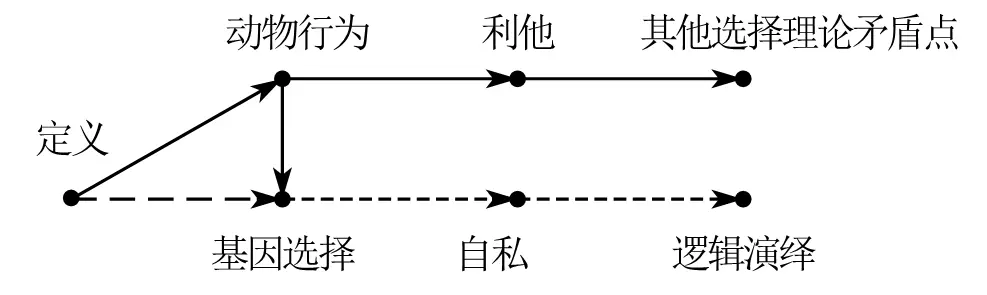
The chapter logic essentially follows4:
$$ \begin{align} & \text{Biological behavior} \Rightarrow \text{why race/individual selection is wrong} \Rightarrow \text{gene selection} \newline & \text{Altruistic behavior motivation} \Rightarrow \text{profit} - \text{cost} \geq 0 \end{align} $$
Whenever the author discusses gene selection, this book resembles a comprehensive modeling manual, offering unique perspectives and eloquent language.
Dawkins extensively employs “game theory” to explore survival strategies in animal behavior, uses “equilibrium” to describe genetic inheritance steady states, “sorting” to depict kinship relationships, and “operations research” to analyze parenting strategies. Overall positive arguments lean toward logical deduction.
I fully agree with the deductive logic emphasized in this book:
This book avoids illustrative arguments, circular reasoning, and using biology to argue sociology, employing logical deduction instead.
- Some say: Baboons are human ancestors, baboons are selfish, therefore humans are even more so. This confuses biological relationships.
- Some say: Animals A, B, C, D all behave this way, therefore humans do too. Such illustrative arguments easily manipulate viewpoints.
- Some say: Only superior individuals can reproduce. This is circular reasoning, with “superior” and “reproduction” mutually justifying each other.
(Actually, “effort leads to success” and “heaven rewards diligence” also constitute circular reasoning. I prefer to term such inspirational logic as survivalist philosophy—manifestations of survival wisdom used for self-affirmation, self-promotion, and self-comfort, often beneficial for individual growth. Rather than absolute rules of societal operation, they represent ideal environments social sciences aim to shape—environments conducive to developing forward-looking5 moral perspectives.)
Initially reading like many readers, I found the argumentative logic in certain chapters ambiguous.
Later summarizing revealed each chapter’s structure essentially follows:
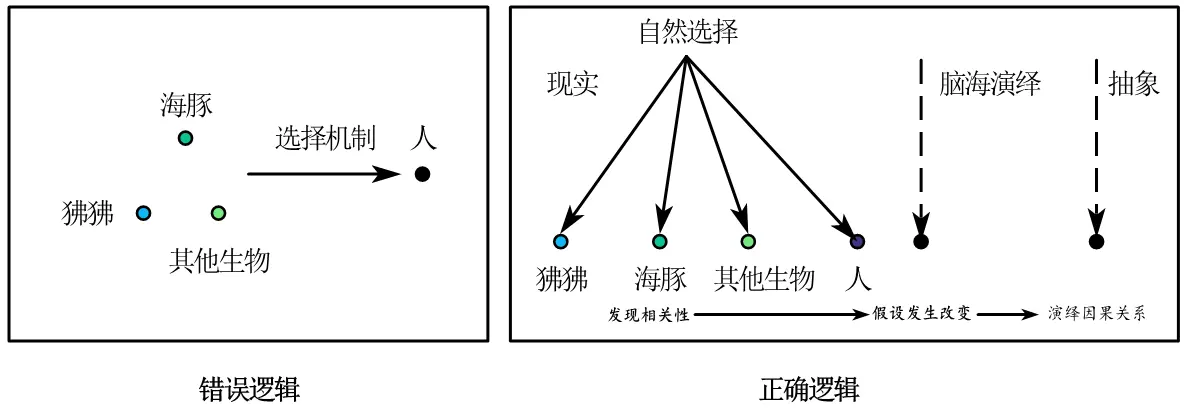
First proposing new definitions and animal behavior questions, then refuting errors in other theoretical levels, followed by deducing gene selection logic.
Seemingly selfless choices to help others at individual, kinship, and clan levels ultimately reduce to means for gene self-perpetuation. This explains why the author considers the gene perspective optimal—it achieves unification of altruistic behaviors and selfish motivations.
$$ \begin{align} & \text{Superficially altruistic: } P_{\text{individual}} - C_{\text{individual}} \leq 0 \newline & \text{Actually selfish: } P_{\text{gene}} - C_{\text{gene}} \geq 0 \end{align} $$
III. Discussions Beyond the Book
Given my relatively limited knowledge in biology, I primarily conducted brief searches on Google Scholar, Quora, Wikipedia, and WOS. The conclusion is that this book mainly popularizes a perspective for viewing the world, but positive research and direct applications appear somewhat limited.
1. Evolutionary Theory (evolution)
Based on current research, evolutionary theory seems to emphasize non-genetic individual changes and doesn’t deny trait development beyond individual genes. This doesn’t mean the book’s viewpoint is incorrect, merely that the gene perspective is no longer unique.
Since the beginning of the 21st century, some biologists have argued for an extended evolutionary synthesis, which would account for the effects of non-genetic inheritance modes, such as epigenetics, parental effects, ecological inheritance and cultural inheritance, and evolvability (Wikipedia).
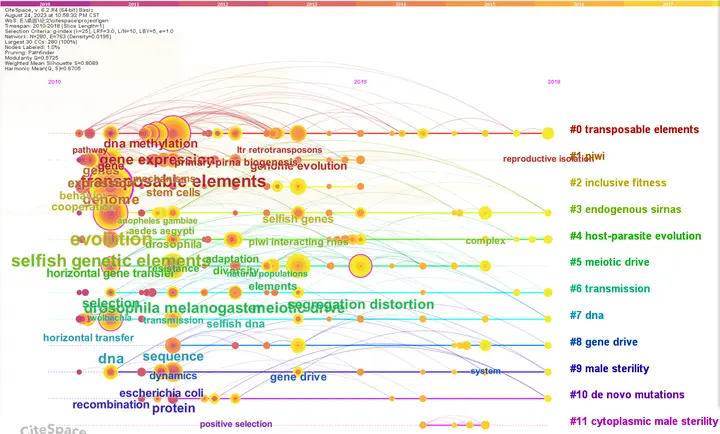
Searching WOS with “selfish gene” as the subject6, then visualizing recent research through CiteSpace.
(May not be entirely rigorous—cell science papers are numerous; greater rigor might require further precision to evolutionary theory and natural selection.)
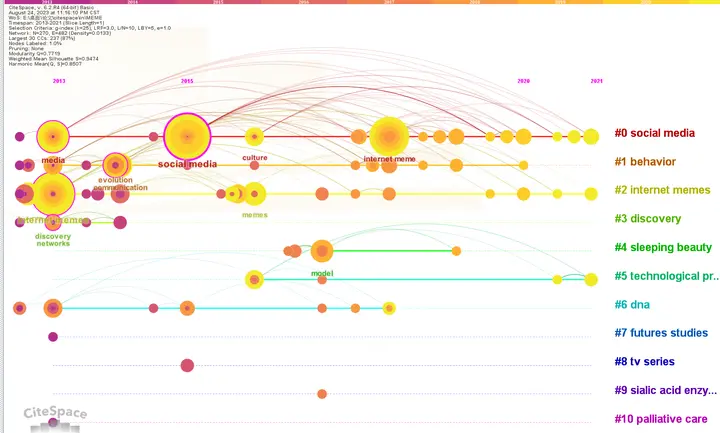
2. Beyond Zoology: MEME (Memes)
What’s remarkable is that beyond evolutionary theory, this book has made significant contributions!
To analogize “gene” transmission, Dawkins coined “meme” from the Greek root “mimeme” (to mimic) (to create lexical parallelism with “gene”).
We frequently encounter various meme images on the internet:
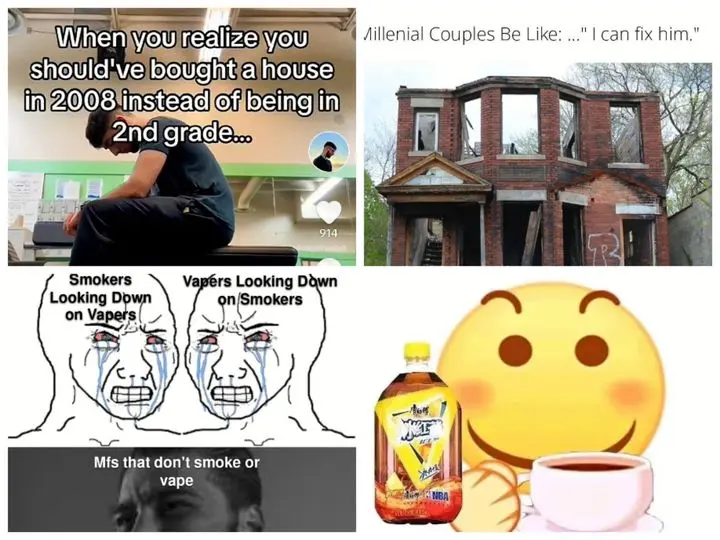
Meme images and other popular symbols represent certain cultures or events, possessing heritability yet potentially varying among individuals—sharing, spreading, mutating. This transmission phenomenon resembles gene propagation and is termed MEME.
“The Selfish Gene” already clarifies it’s not “social Darwinism,” but in Chapter 11 “The New Replicators,” elaborates the author’s perspective on culture. Society operates and develops under the dual-track system of “genes” and “memes.” Animal deception appears unconscious, more instinctual for survival, manifesting as genetic behaviors and appearance deception. Humanity’s uniqueness lies in culture—some cultures even appear anti-genetic!
3. Humanity’s Uniqueness
“Sapiens: A Brief History of Humankind” introduced me to de-anthropocentrism. Homo sapiens is merely one species in human evolution; humanity might not be particularly remarkable. You could say humans domesticated rice, but equally, rice domesticated humans—once freely roaming mountains, humans became confined around fields. Many works’ “de-anthropocentrism” views humans as Earth’s ecological destroyers, even considering humanity Earth’s pests7. From a clear Marxist political economy stance, it’s genuine anthropocentrism—environmental protection aims to preserve biodiversity (symbiosis rather than harmful parasitism), ultimately maintaining this diversity to protect humanity. Human-world interaction constitutes subject-object relationships; transforming the world is natural.
This work appears as gene-controlled organisms’ “de-anthropocentrism,” yet by distinguishing natural selection from social development, humans still seem unique.
Kinship selection and individual selection theories inevitably face dilemmas explaining “altruistic behaviors.” Gene selection theory patches this theoretically as follows:
$$ \begin{cases} Superficially\ altruistic: P_{individual} - C_{individual} \leq 0 \newline Actually\ selfish: P_{gene} - C_{gene} \geq 0 \end{cases} \newline $$
$$ \begin{cases} Finite\ game: selfish\ strategy \newline Infinite\ game: selfish\ strategy \rightarrow cooperative\ strategy \end{cases} $$
From a moral perspective, I find this intriguing. Subjectively perceived altruism and natural selection-driven altruism intersect. Setting aside evolutionary theory in social development and examining moral behaviors alone: does purely conscious altruistic morality exist in humans?
$B - A \sim \varnothing$: Is the set difference A minus B empty? If not empty, what causes it?
This likely closely relates to dilemmas faced by gene selection theory.
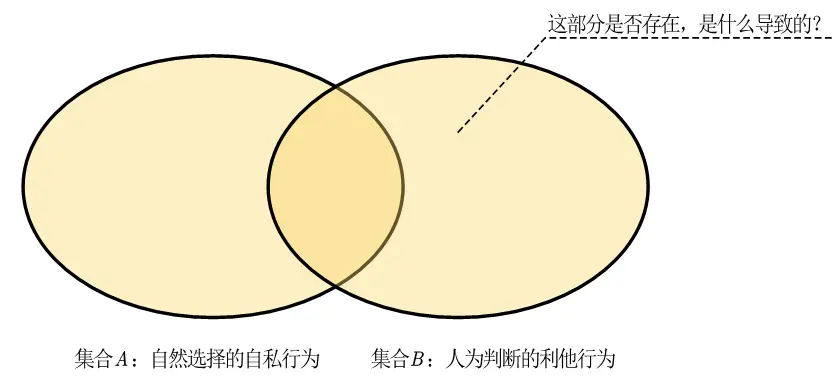
Gene selection theory’s own dilemma is explaining useless traits:
Examples include cross-species affection, homosexuality, moths flying into flames, zebra stripes…
If viewed as gene-driven, numerous hypotheses exist. Perhaps we cannot comprehend special traits, but they’re actually beneficial; perhaps elimination requires time; such traits might emerge because they represent evolutionary transitional phases or unfinished products; certain pressures might cause genetic dysregulation (e.g., genes providing random hormone levels in humans)…
If viewed as gene-independent behaviors, we generally default to human uniqueness. Genes lack purpose and consciousness; compared to genes and animals, humans possess remarkable foresight. Human behaviors and societal operations stem from dual influences of nature and culture. Rather than worrying about human nature, what we can do is vigorously transmit altruistic ideologies through memes (MEMEs).
(For me personally, whether de-anthropocentric or anthropocentric, the major premise seems difficult to prove.)
IV. Detailed Reflections: Primarily Interesting Viewpoints
(Currently updated to Chapter 8)
Chapters 1-4: Mainly explaining what genes are
Gene quality: Genes exist in specific environments; quality depends on overall compatibility. Being good in environment a doesn’t guarantee goodness in environment b.
Death genes: Is individual death a manifestation of racial selection altruism?
The key lies in how death genes are viewed.
- Viewpoint: Many death genes exist worldwide; currently retained death genes are beneficial—they function to delay host reproduction.
- Further speculation: Death genes within bodies are good genes that have aged, while another good gene works to postpone this aging process until after reproduction accelerates.
- Further speculation: Deception genes—delayed reproduction might enable longer survival.
(Here too, the author only conducts logical deduction without evidence indicating the above viewpoints are correct.)
Cloning vs. reproduction: Since asexual reproduction exists, why do human genes choose sexual reproduction?
Genes continuously experiment with combinations to find optimal arrangements. Asexual reproduction resembles growth without distinction; reproduction manifests differences, comparing original team combinations’ quality, allowing each to find its optimal destiny8. Genes exhibit free-riding and opportunistic behaviors; sexual reproduction carries some useless genes.
Chapter 5: Aggression
An interesting “animal ethology” question:
“Animal conflicts are actually ritualistic. Fighting over territory, losers leave rather than being exterminated. Is this racial unit altruism?”
This chapter argues: gene combinations create biological survival strategies; different survival strategies interact; failed strategies recombine to refine survival approaches until various strategies reach equilibrium (ESS). The argumentative approach resembles economics’ “duopoly Swigert model” and “game theory” (from grim strategies—hawkish, dovish—to delayed, mixed strategy games) discussing steady-state outcomes under different strategies.
Intraspecies competition is symmetrical; extermination isn’t steady-state. For example, the Three Kingdoms period persisted long; if three identical countries existed, they might endure indefinitely9. Interspecies competition is asymmetrical; extermination is steady-state. Lions hunting deer represents genetically determined hunting and escape strategies—this is steady-state equilibrium.
Chapter 6: Gene Race
Parents love children; biology terms this “kin” selection. Is this racial unit altruism?
“Kin selection” only explains direct relationships, not collateral relationships or assistance to strangers.
$R_i$ represents kinship closeness, $P_i$ represents probability increase of similar gene continuation after assistance, $C$ is assistance cost, $n$ is number of common ancestors, $k$ is generations between relatives. When altruistic behavior occurs, cost-benefit analysis satisfies:
$$ \begin{align} R_i &= n \times \left(\frac{1}{2}\right)^{k} \newline \text{s.t.} & \sum_{i=1}^{n} R_i \times P_i - C \geq 0 \end{align} $$
The author considers these extreme behaviors, unrepresentative, requiring further statistics.
Genes lack consciousness and mathematical ability, thus this calculation occurs through trait-manifested appearance judgments, also producing deceptive survival strategies. For example, the famous “cuckoo parasitism.”
Inference: Your maternal uncle might exhibit more “altruistic behavior” toward you than your father, because your uncle knows you’re his sister’s child with family genes, but your father cannot be certain………
Chapter 7: Family Planning
Animals often regulate their population’s reproduction numbers. Is this racial selection altruism?
Traditional racial selection theory’s two explanations:
- Conspicuous display: Some researchers believe birds gather to observe current population size and control reproduction numbers.
- Territory: Many animals first compete for territory, then reproduce. Limited territory means those without territory don’t reproduce, controlling population numbers. Essentially, territory serves as animals’ reproduction certificates.
Traditional theories treat parental love as exceptional, distinguishing it from ordinary altruistic behaviors. The author believes all reproducers “choose” between birthing and rearing. On one hand, each individual attempts maximal reproduction to perpetuate genes. On the other, more reproduction increases survival pressure. Thus, individuals choose between reproduction numbers and rearing pressure, not based on population size.
I think the difference becomes clearer using common economic representation:
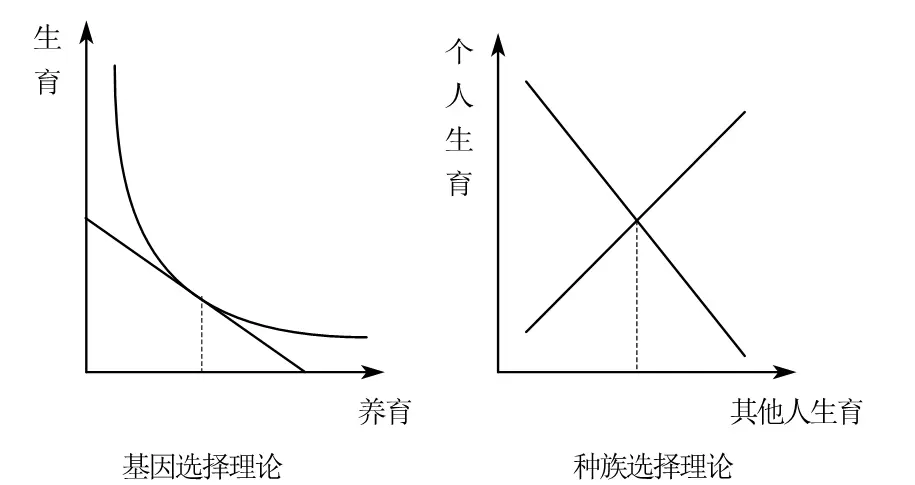
Self-drawn image, economic approach to equilibrium points: Racial selection theory involves individual reproduction demand versus others’ reproduction supply; gene selection involves individual allocation between reproduction and rearing. Personally, it’s refinement rather than refutation. Analogous to economics, gene selection theory’s rearing cost changes partly stem from others’ reproduction situations.
If individuals choose reproduction based on population numbers, as birds, optimal strategy would be pretending to reproduce heavily, making others reproduce less, then secretly reproducing more. But eventually everyone reproduces heavily, leading to collapse.
Animals without territory don’t lose reproductive capacity but wait until having territory to reproduce. The key isn’t just “how many” but also “when.”
Chapter 8: Intergenerational Conflict
Chapter 7 involved parents weighing “reproduction” versus “rearing”; Chapter 8 involves parents weighing rearing strategies.
“Within a family, what causes parental favoritism? How do favored individuals respond?”
Notably, this favoritism exhibits intergenerational characteristics. Among siblings, parents might favor the strongest, the weakest, or the youngest. Among descendants, compared to children, parents might favor grandchildren.
Essentially maximizing expected genetic benefits. For example, a mother’s total resources are $c$, $U_i(C_i)$ represents genetic continuation benefits from allocating $C_i$ to the $i$th child.
$$ \begin{align} \max E(X) &= \sum_{i=1}^{n} U_i(C_i) \newline st. \sum_{i=1}^{n} C_i &= c \end{align} $$
Parental favoritism motivation: $U_a(C) - U_b(C) > 0 \Rightarrow E(X)_{max}$
How to explain female “menopause”?10 For parents, children have closer kinship than grandchildren, but grandchildren have longer expected lifespans, thus tending to invest in grandchildren $U_{grandchild}(C) - U_{child}(C) > 0$. If parents could reproduce at any age, motivation for investing in grandchildren would diminish; selfish genes would disrupt reproductive genes.
Does favoritism only create sibling rivalry?
From a genetic perspective, siblings share identical genetic content with me—genetic interest community. If allocating resources to a yields greater utility than to b, b understands, just as older brothers care for younger brothers.
How do weaker, potentially abandoned offspring respond to such favoritism?
How do weaker, potentially abandoned offspring respond to such favoritism? If parents don’t feed them, constant crying might attract predators.
- Thus parents decide: “Is feeding value greater than killing cost?”
- Their game: “Is obtaining food value greater than predator attraction risk?”
Hence “only children truly feel secure in being loved” (tongue-in-cheek).
Another hypothesis: Selfish birds, for self-survival, push their own siblings out of the nest immediately after hatching?
Verifying the above hypothesis cleverly uses symmetry (this should be problem-solving techniques middle school teachers mention in solving equations—the rarity lies in transcending equations to see problems).
For equations $\begin{cases} x+y=3 \newline xy=2 \end{cases}$, since $x$ and $y$ play identical roles, solutions must satisfy $x=y$.
A bird is both previous generation’s child and next generation’s parent. If truly selfish enough to harm siblings, yet genetically they’re identical, then this genetic individual highly values itself. Loving itself more than its own children, it wouldn’t reproduce—such genes inevitably go extinct.
The author refutes this viewpoint; I increasingly see resemblance to contemporary “marriage-free” ideology.
Chapter 9: Battle of the Sexes: Children as Genetic Strategy Stakes
Returning to Chapter 5’s steady state: deer genes choose fleeing; lion genes choose hunting—forming a game equilibrium state. Many mating genetic strategies exist worldwide: one chooses pursuing quantity, actively seeking mates, not providing nourishment; another chooses providing nourishment, passively attracting mates. Theoretically polygynous, yet men and women employ different strategies seeking equilibrium. Genetically, children inherit $\frac{1}{2}$ genes from each parent, but parents’ initial investments differ. Each aims to maximize gene transmission with minimal expected cost.
This involves multiple decisions: reproduction methods, rearing methods (investment in offspring), rearing goals (gender, traits…)
$P$ represents genetic inheritance benefits after having children, $C$ represents personal costs.
Regarding reproduction methods, first-mover advantage exists. For marine life, females typically release eggs into water first, then males seek them—females possess sufficient advantage to leave early, leaving males to rear alone. For terrestrial life, males possess first-leaving advantage.
Regarding rearing methods, assuming males have loyal and disloyal strategies, females have testing and non-testing strategies. Game outcome: various characteristic male-female strategies maintain specific proportions.
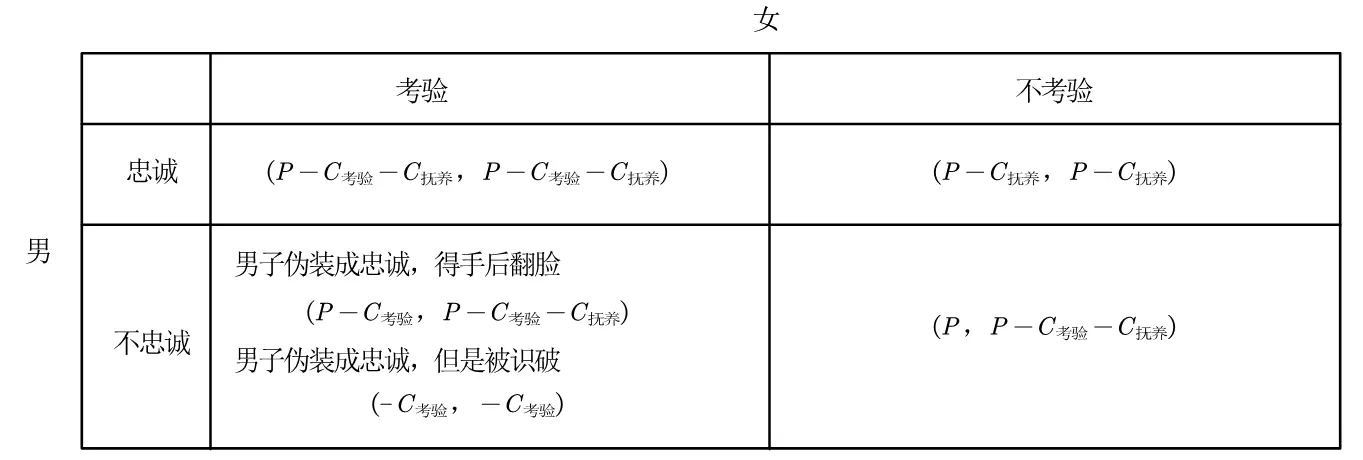
Regarding rearing goals, genes promote certain traits continuously filtered and strengthened—feather color, body structure… If division-of-labor traits like gender, they maintain fluctuating balance. Such division-of-labor advantages emerge relative to other resources, like capital flowing into all profitable areas until various industry profit rates converge11.
Chapter 10: You Scratch My Back, I’ll Ride on Yours
Encountering predators, birds call out, antelopes leap high, insects form mutual assistance systems.
Animal groups: The author directly judges (I feel almost no argumentation) to avoid companions attracting more animals or showing off leaping ability to make predators chase others. Animal group movement resembles flow from edges squeezing into center, because edges are more easily attacked first.
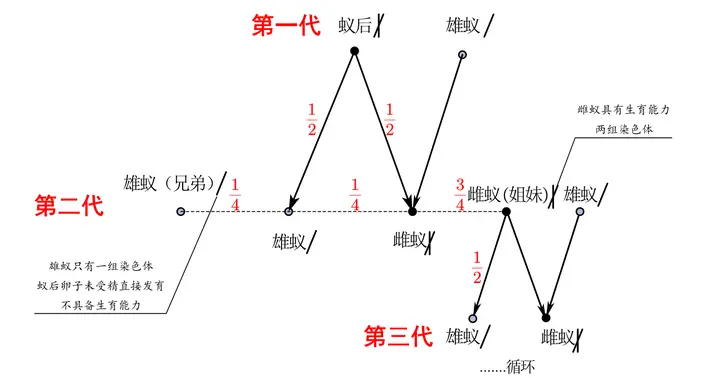
Insect groups: Insects form altruistic societies because not all individuals can reproduce. Worker bees cannot reproduce, thus their goal becomes genetically similar companions.
Insect reproduction cycle diagram essentially as follows; red represents genetic similarity. Male ants have only one chromosome set—unfertilized eggs directly developing, cannot reproduce. Female ants have two chromosome sets, can reproduce. Since sister female ant similarity is $\frac{3}{4}$, higher than mother similarity $\frac{1}{2}$ (because they also share father-transmitted identical genes), second-generation female ant relationships surpass mother relationships. Since brother male ant similarity is $\frac{1}{4}$, lower than mother similarity $\frac{1}{2}$, second-generation male ant relationships are weaker than mother relationships.
Symbiosis: Two game strategies reach equilibrium point; species cooperate for greater benefits. But cooperating parties both have two options: selflessly help each other, or help each other but if the other doesn’t help, stop helping. Game equilibrium is the latter.
In economics, Mandeville published a book titled “The Fable of the Bees,” arguing “market economy transforms private vices into public benefits”—he compares human society to beehives, somewhat similar. Steven Cheung also has a paper “The Fable of the Bees: An Economic Investigation”12, but that paper doesn’t study bee structure’s inspiration for human society, but investigates spontaneous transaction systems between fruit farmers and beekeepers under market mechanisms, where no “market failure” occurs. Previously I thought both arguments identical, but apart from sharing liberal stance, most aspects differ.
Final chapters already integrated into previous discussions; here brief summary only.
- Chapter 11: MEME: Cultural inheritance “memes”
- Chapter 12: Nice Guys Finish First: Single prisoner’s dilemma leads to selfishness; infinite repeated prisoner’s dilemma games lead to cooperation
- Chapters 13-14: Natural society ≠ human society, gene selection ≠ genetic determinism
- Chapter 15: Constraints on Perfection: Explaining gene selection theory’s dilemmas
References
-
Now equivalent to 5 prefaces: 40th anniversary, 30th anniversary, second edition, preface, foreword ↩︎
-
Actually gives me a feeling of choosing observation coordinate systems ↩︎
-
This question comes from “THE BOOK OF WHY” ↩︎
-
First three chapters introduce and explain concepts ↩︎
-
Huang Zongzhi. Establishing Forward-Looking Practical Social Science Research: Starting from an Important Shortcoming of Substantivist Theory[J]. Open Times, 2020(1): 18. ↩︎
-
Title searches yield very few results ↩︎
-
: Not symbiotic relationships, but harmful parasitism. Visiting Central Academy of Fine Arts exhibitions, many artworks seem to reflect this ↩︎
-
Evokes welfare economics first theorem ↩︎
-
I’m contemplating explaining European nations’ coexistence and China’s unification based on this ↩︎
-
Unable to reproduce after certain age ↩︎
-
Marx’s famous derivation: average profit rate formation. This derivation shows proletariat must first liberate everyone before liberating themselves. ↩︎
-
Cheung S N S. The fable of the bees: An economic investigation[J]. The Journal of Law and Economics, 1973, 16(1): 11-33. ↩︎