
Repost: Xiaokai Yang, "My Life"
 滑翔闪
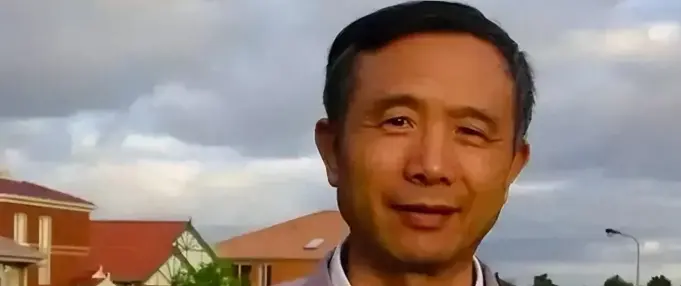
(This article was compiled from an oral account given by Xiaokai Yang to our reporters Xiao Rui and Li Liming in 2003, and was reviewed and revised by him; some parts were cut during editing.)
Source: The Economic Observer
Xiaokai Yang was a self-taught genius whose path of hardship is deeply moving. Lately I keep complaining that the environment is no good, but after going over Xiaokai Yang’s path of growth again, I feel deeply ashamed.
In studying theory, one must be able to enter it and step out of it, to leap out of the knowledge and analyze the current situation; losing oneself in a vacuum world for one’s own pleasure is surely a failure. Accumulation should be persistent; one should actively use mathematics to describe reality, and through that grasp the thought behind it and cultivate intuition.
For a partial introduction to Xiaokai Yang’s theory, see Development Economics: Marginal Analysis and Inframarginal Analysis (Introduction)
As Heaven’s movement is ever vigorous, so must a gentleman ceaselessly strive along. Salute!
My original name was Yang Xiguang; Xiaokai Yang was my childhood name, which I took up again after 1978. I was born in Jilin in 1948 and grew up in Changsha, Hunan. My grandfather was a landlord who ran a school in the countryside. He had received a strict Confucian education, and during the late-Qing movement to promote Western learning he also attended a Western-style school. Our parents’ generation likewise received a Confucian education from childhood; I remember that when I was in elementary school, my father asked an uncle to teach me the Analects at home.
Both my parents joined the revolution in 1938. My father was originally a senior cadre of the Hunan Provincial Party Committee. In 1959, because he supported Peng Dehuai’s views and opposed the Great Leap Forward and the public mess halls, he was branded a rightist opportunist. That was in the autumn of 1959. I was still very small then. One day my father carried me to the window and said to me kindly: “Cadres who stay too long in the higher organs don’t understand conditions at the grass roots, so they should go down to learn about conditions.” I looked at the red leaves of a big maple outside the window, a little puzzled why my father’s manner was so unexpectedly gentle that day. My father was in low spirits those days and often argued with my mother. Only three years later did I learn that my father had been branded a rightist opportunist in 1959. My father told me that in 1962 he was rehabilitated, and that they admitted his 1959 views had been correct.
Where Is China Going?
The Cultural Revolution broke out in 1966. Because my parents were both sympathetic to the views of Liu Shaoqi and Peng Dehuai, they were again branded counterrevolutionary revisionists, and during the Cultural Revolution we became a family of “black monsters,” deeply discriminated against. At the time I was a first-year senior high student at Changsha No. 1 Middle School. Because I was discriminated against and could not join the Red Guards, I joined a rebel faction that opposed the Red Guards. The organization I joined was called the “Seize Military Power Combat Team,” which belonged to the “Provincial Proletarian Revolutionary Alliance” (“Sheng Wu Lian”). At school the difference between the Red Guards and the rebels was that the Red Guards were all of good class background, while the rebels were mostly of bad background. So during the Cultural Revolution we supported the rebels and opposed the Red Guards; the rebels in senior high mainly opposed the “theory of blood lineage.” In the early Cultural Revolution, the masses could form their own organizations and join different ones according to their own views. By 1967, the military had banned mass organizations and forbidden the masses from forming political organizations. On February 4, 1967, the Central Cultural Revolution Group suddenly ordered the Hunan Provincial Military District to send troops to suppress Hunan’s largest rebel organization, “Xiangjiang Fenglei,” arresting over ten thousand people. So the rebels came into conflict with the authorities. Our rebel organization, the “Seize Military Power Combat Team,” was also drawn into this conflict, and I was arrested and held in the Changsha Public Security Bureau detention center for more than two months.
After I was released that time, I wrote many big-character posters one after another, including “An Investigation Report on Urban Educated Youth Going Up to the Mountains and Down to the Villages” and “Political Power Grows Out of the Barrel of a Gun,” and so on. In 1968 I wrote a big-character poster titled “Where Is China Going?,” advocating that China adopt a Paris Commune-style democracy. This article had a great impact at the time. After the second-in-command of the Hunan Provincial Revolutionary Committee preparatory group read “Where Is China Going?,” he hurriedly passed the word to the provincial cadres of the time to characterize it. Soon my article was sent up to the Central Cultural Revolution Group.
At nine o’clock on the evening of January 24, 1968, some leaders received members of the Hunan Provincial Revolutionary Committee preparatory group and representatives of some Hunan rebel organizations in the Hunan Hall of the Great Hall of the People in Beijing, and announced the suppression of a Hunan rebel organization called “Sheng Wu Lian,” making some very stern, weighty speeches and instructions. During the meeting, Kang Sheng several times singled out “Yang Xiguang of No. 1 Middle School” and the article “Where Is China Going?,” calling it “the counterrevolutionary ’lament of the warhorse.’” Kang also asserted: “I have a feeling that his theory is by no means something a middle school student, or even a university student, could write; there is a counterrevolutionary black hand behind him!” Jiang Qing put it more bluntly: “That ‘Seize Military Power Combat Team’ — let it go to hell!” A few days later I was “personally named” and thrown into prison, held at the Zuojiatang detention center of the Changsha Public Security Bureau.
I was held in the detention center for over a year. In the autumn of 1969, in October, I was transferred from detention to formal arrest. Soon after, on a clear winter day in November, I was sentenced to ten years’ fixed-term imprisonment for the crime of counterrevolution, and sent to the Jianxin labor reform farm by Dongting Lake in Yueyang to undergo reform through labor, until I was released after serving my full term in early 1978.
Ten Years Behind Bars
“Where Is China Going?” not only landed me in prison but also brought great disaster to my family. In Kang Sheng’s instructions of January 24, 1968, he said that “Where Is China Going?,” “Our Program,” and “Resolutions on the Current Situation” by Sheng Wu Lian were not something middle school students could have written, nor university students; there must be a black hand pulling strings behind them, and they must ferret out “Teacher Chen,” who waved the goose-feather fan behind these students. My mother happened to be surnamed Chen, and after Kang Sheng’s instructions reached Changsha she was denounced many times; her hands were blackened with ink and she was forced to kneel in public as a warning. The blackened hands symbolized the “black hand.” After enduring endless humiliation, unable to bear the disgrace, she hanged herself. After my mother was driven to suicide, my two younger sisters lost their home. My father was locked up in a “Mao Zedong Thought Study Class,” one sister was sent down to the mountains of western Hunan, the other fled to Shanxi to seek refuge with relatives, and my elder brother was also expelled from his work unit and driven to the countryside.
During the year and a half I was held at the Zuojiatang detention center, I found a teacher to study English, an electrical engineer to study electrical machinery, and a mechanical engineer to study mechanical drafting. I also read A General History of the World, Marx’s Capital, and a book called Long Live Mao Zedong Thought. I borrowed Capital from a fellow prisoner, Teacher Chen, and so at Zuojiatang I finished the thick three volumes of Capital. My first impression of Capital was quite good; it had far more of an academic flavor. But after I finished the first two volumes, I found that the labor theory of value ignored another important factor determining value — use value. It was many years later that I learned that what Marx called use value is called utility in modern economics. But I quite liked Marx’s elaboration on Adam Smith’s theory of the division of labor. After finishing Capital, for some reason my heart came to expect that I would become an economist in the future. I had three ideas: first, to clarify the importance of use value in the theory of value; second, to weave the problem of the division of labor into the theory of value; and third, to mathematize the theory of value. Later, in the labor reform team, I wrote an economics notebook along this line of thought. It was many years before I realized that these ideas had long ago become far more sophisticated theories in modern economics. The idea of mathematizing economic theory I first saw on a big-character poster at Peking University. Another big-character poster that stimulated me was about how a privileged stratum had already formed in China, and how Marx’s method of economic analysis should be used to reanalyze Chinese society. That stimulus was the intellectual starting point of my later writing of “Where Is China Going?”
After I went to prison, my political philosophy was already very different from when I wrote “Where Is China Going?” When I wrote that article, I had a pursuit of idealism; I believed a democratic polity should be elected by the people. By the time I was in prison I had completely lost that idealism. I believed that the standards by which people judge the values they pursue change with history, so how history will develop is far more important than any ideal goal. Before, the question I cared about was “what is good and what is bad, and how should this world be?” In prison I asked instead: “how will this world develop?” The worst things might well happen within our own lifetime, so subjective judgments of good and bad, right and wrong have no meaning; how to adapt to circumstances and survive is what matters.
In prison I studied some mathematics, thinking of using mathematics to rethink the theory of value, thinking of mathematizing the Marxist and classical ideas on the division of labor that I could see at the time, and gradually I had some ideas. Because I didn’t believe in the official political economy, and had no training in Western neoclassical economics, I was relatively free, and in that state of isolation some new ideas could emerge. In the labor reform team I derived “Gossen’s Second Law” (the equality of marginal utility per dollar), hierarchy theory, the Nash bargaining model, and the theory of the division of labor on my own, and thought these were all my great discoveries. But when I could read more books, I found that these ideas had long ago been developed into mathematical models by Western economists. Still, fortunately, these were things I thought up myself — “great minds think alike,” and I was one of those great minds after all!
My experiences of those ten years are all written in the book Monsters and Demons, published by Oxford University Press in 1997.
A First Trial
After my release at the end of my term in April 1978, I returned to Changsha. Because no work unit dared accept me, the author of “Where Is China Going?,” I stayed at my father’s home for a year. That year I audited a year of mathematics courses in the mathematics department of Hunan University; these audits were arranged by some rightist professors who had just been reinstated. At this time I began to use my childhood name, Xiaokai Yang, again. Later I worked for half a year as a proofreader at the Hunan Xinhua No. 2 Printing Plant in Shaoyang.
In 1979 I applied for the master’s program at the Institute of Economics of the Chinese Academy of Social Sciences, but because of my “counterrevolutionary history” I was refused permission to take the exam. In 1980 I applied again, and with the help of Yu Guangyuan, then vice president of the Chinese Academy of Social Sciences, I finally got the chance to take the quantitative economics exam. After passing the exam I was admitted as a research assistant and worked for nearly two years at the Institute of Quantitative and Technical Economics of the Chinese Academy of Social Sciences.
From 1979 to 1982 I studied neoclassical economics quite systematically, often auditing courses at various universities, borrowing books from the Beijing Library, and attending econometrics training classes. I studied systems theory, information theory, control theory, and operations research, did some econometric research, computed some shadow prices, translated a textbook on economic cybernetics, and published Preliminary Economic Cybernetics and Foundations of Mathematical Economics, roughly at the level of intermediate microeconomics, which was still quite new at the time. Later I met many people who went abroad to study, and they all said that their main understanding of Western economics in China had come from reading my two books.
By 1982 I was hired as a lecturer at Wuhan University, where I worked for a year and a half, teaching mathematical economics and economic cybernetics. During this period I also published Economic Control Theory and Foundations of Mathematical Economics, and I began preparing to study abroad. Because some of the econometric models in my books attracted the attention of Professor Gregory Chow of Princeton University, who was then visiting Wuhan University, I was admitted to the PhD program in the economics department of Princeton University in 1983 with Professor Chow’s help. When I was going abroad, since I had not yet been rehabilitated, I could not pass the political screening for going abroad. At this point it was again thanks to Professor Chow (Zou Zhizhuang), who wrote a letter to the leaders asking for help. Later this letter was forwarded to Liu Daoyu, then president of Wuhan University, asking him to handle it. In the end President Liu Daoyu approved the procedures for me to go abroad, and in 1983 I arrived at Princeton University.
At the same time, under the instruction from the relevant leaders that “the Yang Xiguang problem should be handled by the court according to law,” the Supreme Court instructed the Hunan Provincial High Court to re-examine my “counterrevolutionary” case. In 1983 the trial committee of the Hunan Provincial High Court unanimously held that “Where Is China Going?” “belongs to a matter of ideological understanding, had no counterrevolutionary purpose, and did not constitute a crime. Accordingly, the original first-instance and second-instance determinations and sentences were improper and should both be revoked, and Yang Xiguang is declared not guilty.”
A Hidden Dragon Rises from the Deep
My theory of the division of labor took initial shape while I was in prison, but it truly matured during my doctoral studies at Princeton. In the doctoral program there were two years of coursework, and during those two years I gradually compared the ideas of the mainstream school with my own. In the two years in Beijing I basically set aside my own thinking and systematically studied neoclassical economics; much of what I know of neoclassical economics was learned in those two years. After arriving at Princeton, some of the courses I took I had already taught in China, so I compared neoclassical ideas with my own, to see whether there was any difference, to see which of the things I had thought about were valuable and which were not. For example, I had derived Gossen’s Second Law myself using mathematics in prison, and at the time I thought it was a discovery, but the moment I left prison I found people had known about it a hundred years earlier. I had also thought about hierarchy theory and the Nash bargaining model in prison, and I wrote these theories into my Preliminary Economic Cybernetics. I found that on many problems my thinking was not as good as others’; for example, I later found that the bargaining model Nash built was far better than mine, so I gave it up. But this also encouraged me: many of the things others thought of, I could think of too. This is what is meant by “great minds think alike.”
The more I read, the more I realized how hard it is to innovate. People are all very similar; what you can think of, others can think of too. This was how I felt when I first went to America. I am a person with many new ideas, but after seeing more, I found that many so-called new ideas had actually been thought of centuries ago. Having slowly read their work, I found my own ideas were not new at all. Still, my luck was not bad; after reading a great deal, in the end I found that some of the things I had thought about had not yet been thought of by others — namely the equilibrium model of the theory of the division of labor, which later became my doctoral dissertation.
In 1987 my dissertation was approved at my defense, after which I went to the Economic Growth Center at Yale University for a year of postdoctoral research. A year later I went to teach in the economics department of Monash University in Australia. In 1989 I was promoted to senior lecturer, in 1992 I became a full professor, in 1993 I was elected a Fellow of the Academy of Social Sciences in Australia, and in 2000 I was promoted to chair professor. Over these years, although I have always taught at Monash University, I have spent about a third of each year as a visiting professor in the United States, Hong Kong, and Taiwan. Since 1998 I have also returned to China more often, serving as a visiting professor at Peking University and Fudan University.