
Shanxi Datong "Engagement Rape Case" Second Trial: An Economic Perspective on Judicial Spirit and Execution

A recent high-profile legal case has attracted widespread attention: “Shanxi Datong ‘Engagement Rape Case’.” While the apparent controversy centers on the question of marital rape following engagement—undoubtedly wrongful conduct—the question remains: why do online debates persist? The fundamental issue is that the two opposing factions are actually debating at different conceptual levels.
From an economic perspective, this case reveals two particularly interesting phenomena:
- The two sides are fundamentally addressing different issues at different analytical levels.
- Gender significantly influences the cognitive framework through which each party approaches the problem. This dimension warrants careful consideration.
## The Supportive Perspective: Ex Ante “Judicial Spirit” and Legal Principles
The core judicial principles of this case are as follows1:
- Presiding Judge: Sexual intercourse with women cannot violate their will, regardless of whether the parties are engaged.
- Presiding Judge: The state vigorously advocates for the integration of socialist core values and excellent traditional Chinese culture into social life.
- The trial of this case demonstrates the clear stance and firm position of the People’s Court in lawfully protecting women’s rights and interests and punishing criminal acts.
From the perspective of supporters and the presiding judge, the controversy is whether non-consensual sexual conduct after engagement constitutes a violation. In this context, classifying it as illegal is unequivocal.
The spirit of the law provides ex ante constraints on our behavior. What should be done, what should not be done, and how society can develop better—all these are reflected in the forward-looking moral concepts emphasized in social sciences2. The constraint here is that regardless of engagement status, marital status, or relationship dynamics, we should maintain sufficient respect toward our partners.
However, from the current judicial system, the law has not truly implemented genuine judicial fairness in such cases. In terms of terminology, male rape cases are not adequately considered. Rape violates human rights, not merely women’s rights. Without this principle, what is primarily protected is “objectified chastity”3.
The judicial terminology used here is “violation of women’s will,” but rape should not be limited by gender. This linguistic limitation creates the first controversy, diverting the discussion to the issue of betrothal gifts.
The Opposition Perspective: Ex Post “Judicial Execution” and Procedural Concerns
Additional note: In Chinese judicial cases, a second trial reversal is relatively rare, especially in cases involving public security and prosecution.
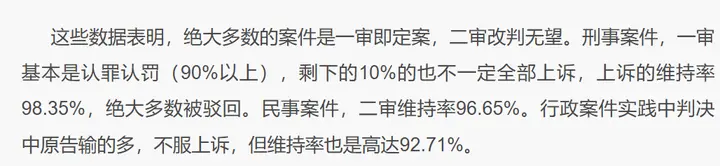
Considering the particular nature of rape cases4, their adjudication differs from other types of cases:
- Physical evidence over testimonial evidence?
- Presumption of innocence?
Regarding procedural justice, I recall a personal experience that illustrates these tensions.
During comprehensive evaluations, competition participation scores and award scores were calculated separately, with upper limits established for both categories.
When my award scores reached the maximum allowable limit, I sought to transfer one award point to a participation point. The class committee, however, ruled against this transfer, insisting that I provide formal documentation of participation (the school issued separate certificates for both participation and awards). The complication arose because my proof of participation had been misplaced, leading the committee to conclude that the award certificate could not procedurally validate my participation! 😅
This experience frequently comes to mind when I observe distortions in execution processes. It demonstrates that equilibrium exists across multiple dimensions: flexibility, precision, and cost-efficiency. The judicial system often faces the challenge of making necessary compromises among these competing elements.
The most troublesome aspect of such cases—protecting procedural justice is highly susceptible to distortion. The discretionary space regarding when testimonial evidence outweighs physical evidence is enormous.
The opposition expresses concern about moral hazards arising ex post, which should be understood as information asymmetry5. Given the elevated importance of testimonial evidence during judicial execution, the cost-benefit calculus for attempting to frame male defendants in such cases becomes fundamentally imbalanced.
In particular, these cases involve significant information asymmetry:
- What evidence can prove women’s consent? This is already extremely difficult.
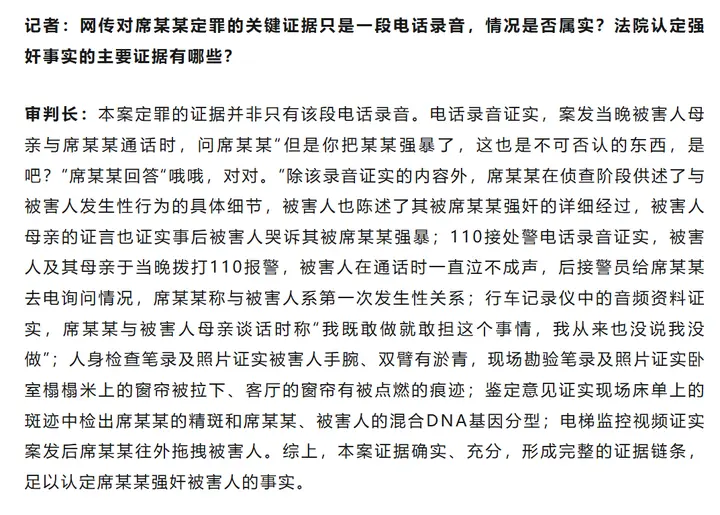
- Post-fact moral hazard refers to: Will women’s mentality change after learning about this type of adjudication? This moral hazard is also difficult to guarantee.
Why Gender Influences Thinking Perspectives?
Synthesizing these perspectives, the answer becomes clear—if rape cases are classified solely as violations of women’s rights rather than fundamental human rights violations, while the judicial spirit may appear correct on the surface, the practical effect of judicial execution becomes problematic. In such framework, the system tends to protect objectified notions of chastity rather than genuinely safeguard women’s rights. This context naturally leads to the overvaluation of testimonial evidence credibility while simultaneously increasing moral hazards, thereby creating position-based conflicts of interest.
As for how much evidence is required to convince someone of a crime? At least in this case, it involves prospect theory6—women worry about being violated in the future, while men worry about being falsely accused.
For female respondents, the evocative nature of the case generates higher empathy levels, and the available evidence proves sufficient to convince them of the shared experiential reality. Their cognitive reference point typically centers on “what would happen if I were in the same situation” (adverse selection). In contrast, male respondents exhibit greater concern about “what is the risk of being falsely accused” (moral hazard).
Historically, verdicts in male rape cases have been disproportionately influenced by cultural values. However, as societal openness and legal consciousness continue to evolve, this concern should diminish in significance. In this particular case, additional corroborating evidence exists, and I maintain considerable confidence in China’s public security and judicial institutions. It is worth noting that the defendant in this case did, in fact, admit to the criminal acts in question.
Despite the controversies inherent in such cases, the process of debate and legal discourse remains essential. As the philosophical adage suggests, truth often emerges through the dialectical process of uncertainty, and these arguments enable us to address each case on its individual merits while advancing our collective understanding of justice.
-
What are the legal grounds for Xi??’s conviction of rape? Does the plaintiff’s constitute fraudulent marriage? Shanxi “Engagement Rape Case” Presiding Judge’s Response ↩︎
-
However, the legality of capital punishment and abortion remains a subject of ongoing debate ↩︎
-
Dongyan Lao: The cacophony of voices in Shanxi Datong engagement rape case ↩︎
-
The cost of destroying evidence is low while obtaining physical evidence is extremely difficult ↩︎
-
Ex ante information asymmetry leads to adverse selection, where inferior quality drives out superior quality (Gresham’s Law) ↩︎
-
Each individual has a reference point when making judgments. ↩︎